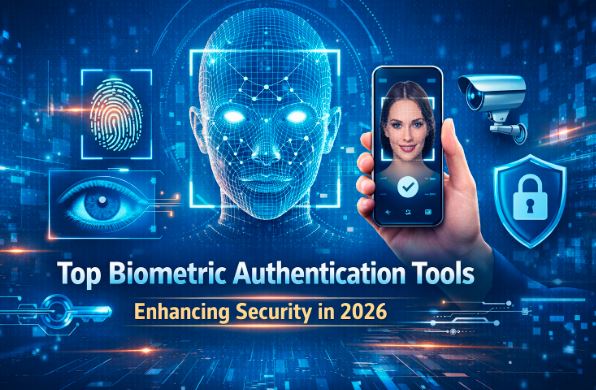
In today’s digital world, passwords alone are no longer enough to protect sensitive data. With rising cyber threats and identity fraud, businesses and individuals are rapidly turning toward biometric authentication tools. These tools use unique human traits like fingerprints, voice, and especially facial recognition to verify identity with high accuracy.
As we step into 2026, biometric security has evolved significantly, with advanced AI-driven solutions leading the way. In this article, we’ll explore the top biometric authentication tools enhancing security in 2026, including powerful platforms like Facia, and how they are shaping the future of digital protection.
1. Facia – Advanced Facial Recognition & Deepfake Detection
One of the most innovative tools in biometric authentication today is Facia, a cutting-edge platform focused on facial recognition and deepfake detection.
Facia uses advanced AI and machine learning algorithms to analyze facial features and verify identities in real time. What makes it stand out is its 3D liveness detection, which ensures that the user is physically present rather than using a photo, video, or mask.
Key features include:
- Real-time facial recognition and face matching
- Deepfake detection to prevent AI-based fraud
- Age verification and identity matching
- Fast authentication (under 1 second)
This makes Facia ideal for industries like banking, government, and online platforms where security is critical.
2. Microsoft Azure Face API – Enterprise-Level Facial Recognition
Microsoft’s Azure Face API is another powerful biometric tool widely used in enterprise environments. It offers advanced facial recognition capabilities, including face detection, verification, and emotion analysis.
This tool is especially useful for:
- Secure user authentication
- Identity verification in apps
- Surveillance and access control
With cloud integration and scalability, Azure Face API is a reliable choice for large organizations looking to implement biometric security.
3. Amazon Rekognition – AI-Powered Image & Face Analysis
Amazon Rekognition is a well-known tool that leverages artificial intelligence for image and video analysis, including facial recognition.
It can:
- Detect faces in images and videos
- Compare and verify identities
- Identify suspicious activities
This tool is widely used in security systems, law enforcement, and media platforms to enhance monitoring and authentication processes.
4. FaceFirst – Real-Time Biometric Surveillance
FaceFirst is designed for real-time facial recognition and security monitoring. It is commonly used in retail stores, airports, and public safety systems.
Key highlights:
- Instant face matching from live video feeds
- Watchlist alerts for security threats
- Scalable deployment for large environments
FaceFirst helps organizations respond quickly to potential risks, making it a valuable tool for physical security.
5. BioID – Secure Cloud-Based Biometric Authentication
BioID offers cloud-based biometric authentication with a strong focus on facial recognition and liveness detection.
Its features include:
- Multi-factor biometric authentication
- Spoof detection to prevent fake identities
- Easy integration with mobile and web apps
BioID is widely used for secure logins, digital onboarding, and identity verification in fintech and healthcare sectors.
6. NEC Biometric Authentication – High-Accuracy Face Recognition
NEC is a global leader in biometric technology, known for its highly accurate facial recognition systems.
Its solutions are used in:
- Border control systems
- National ID programs
- Large-scale security operations
NEC’s technology is recognized for its precision and ability to match faces even in challenging conditions.
7. Thales Biometrics – Multi-Modal Security Solutions
Thales offers a wide range of biometric solutions, including facial recognition, fingerprint scanning, and iris recognition.
Key benefits:
- Multi-modal authentication (combining multiple biometrics)
- Strong encryption and data protection
- Suitable for government and enterprise use
This approach enhances security by using multiple layers of verification instead of relying on a single method.
8. IDEMIA – Identity Verification at Scale
IDEMIA specializes in identity verification and biometric authentication for large-scale systems.
Its solutions include:
- Facial recognition for airports and travel
- Secure digital identity verification
- Payment authentication systems
IDEMIA plays a major role in global security infrastructure, especially in smart cities and transportation systems.
Why Facial Recognition is Leading in 2026
Among all biometric technologies, facial recognition has become the most popular in 2026. The reason is simple: it is fast, contactless, and highly accurate.
Modern systems like Facia go beyond basic recognition by adding liveness detection and deepfake prevention. This ensures that even sophisticated fraud attempts using AI-generated faces can be detected and blocked.
Additionally, facial recognition is easy to integrate into smartphones, apps, and security systems, making it accessible for both businesses and individuals.
Benefits of Biometric Authentication Tools
Biometric tools offer several advantages over traditional security methods:
- Enhanced security: Unique biological traits are difficult to replicate
- Convenience: No need to remember passwords
- Speed: Instant authentication in seconds
- Fraud prevention: Advanced AI detects spoofing and deepfakes
These benefits make biometric authentication a key component of modern cybersecurity strategies.
Final Thoughts
As cyber threats continue to evolve, relying on outdated security methods is no longer an option. Biometric authentication tools are transforming how we protect our digital identities, with facial recognition leading the charge.
Platforms like Facia are setting new standards by combining AI, liveness detection, and deepfake prevention to deliver unmatched security. Whether you’re a business owner or an individual user, adopting biometric authentication in 2026 is a smart step toward a safer digital future.


Leave a Reply