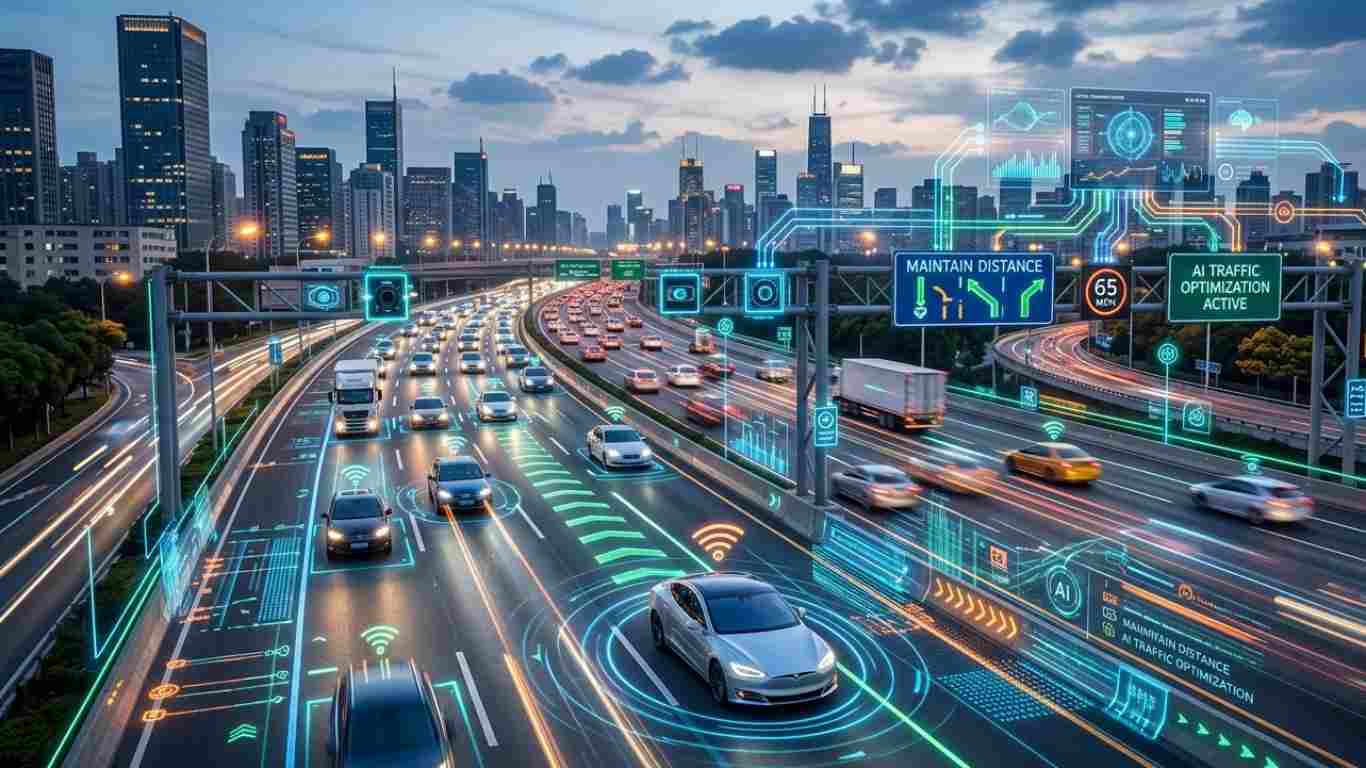
How AI-powered systems are reducing traffic accidents is one of the most meaningful examples of AI in public safety. The value is not abstract. Faster detection and better prediction can reduce real harm on real roads.
Road safety has always depended on perception, reaction, and judgment. AI strengthens all three when it is designed and deployed well.
Why accidents happen so often
Most accidents are not caused by one isolated error. They happen when several risks combine at once.
A driver may be tired, the road may be wet, visibility may be low, and a pedestrian may move unexpectedly. Human reaction is limited, especially under stress.
Where AI changes the equation
AI-powered systems process visual and sensor data continuously, making tools like an AI Burn Rate Calculator essential for tracking operational efficiency and resource consumption.Also AI powered systems monitor lanes, nearby vehicles, pedestrian movement, road boundaries, and sudden changes in traffic behavior.
That matters because machines can react to patterns faster than most people can consciously interpret them. In this context, how AI-powered systems are reducing traffic accidents is really about earlier recognition of danger.
The three capabilities that matter most
Perception
The system identifies what is present: cars, cyclists, pedestrians, lane markings, traffic signs, and obstacles.
Prediction
The system estimates what may happen next. A car drifting left may continue drifting. A pedestrian near the curb may step into the road.
Response
The system warns the driver or supports action, such as automatic braking or steering correction.
Key applications at a glance
| AI Safety Area | What the System Does | Why It Helps |
|---|---|---|
| Lane support | Detects departure from lane | Prevents drift-related incidents |
| Collision alerts | Monitors closing distance and sudden risk | Improves reaction time |
| Pedestrian detection | Identifies vulnerable road users | Reduces urban accident risk |
| Driver monitoring | Detects distraction or fatigue | Prevents delayed response |
| Traffic analytics | Finds high-risk locations and patterns | Supports safer road planning |
It is not only about cars
Cities also use AI to reduce accidents at the infrastructure level. Traffic cameras, smart intersections, and predictive analytics reveal patterns that are difficult to detect manually.
If one intersection produces repeated near-misses, AI can surface that pattern faster. Signal timing, signage, or lane design can then be adjusted.
The limit that should always be acknowledged
AI improves safety, but it does not remove risk. Sensors can fail, weather can interfere, and overreliance on automation creates new dangers.
That is why the best framing is not “AI replaces the driver.” The better framing is “AI supports safer driving and safer road systems.”
Conclusion
How AI-powered systems are reducing traffic accidents comes down to one core advantage: intelligent systems perceive risk earlier and respond faster. When perception, prediction, and human oversight work together, roads become safer for everyone.



Leave a Reply